
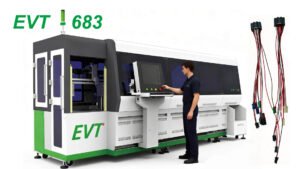
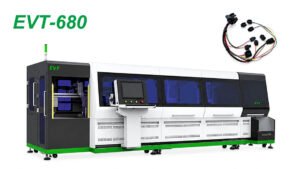
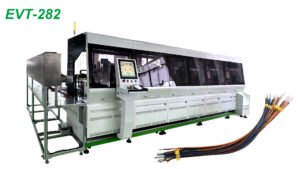
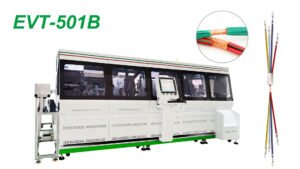


How to Select the Right Stripping and Crimping Machine
Automatic wire stripper suppliers KINGXOUL is a leading manufacturer of automatic wire stripping and crimping machine in wire processing marketplace.
which offer a wide range of cable stripping machine and terminal crimping machine, such as wire stripping machine, wire cutting machine, automatic wire stripping machine, wire crimping machine, wire cutting and stripping machine, automatic wire crimping machine, cable labeling machine, automatic terminal crimping machine, coaxial cable stripping machine, wire tinning machine, pneumatic stripping machine, wire stripping and crimping machine, thermal wire stripping machine, ribbon cable stripping machine, tape winding machine, wire twisting machine, etc.
How to Select the Right Stripping and Crimping Machine
Choosing the right stripping and crimping machine is critical for efficient wire harness production, consistent electrical connections, and long-term cost savings. Whether you process automotive wiring, electronics assemblies, or industrial cables, the ideal machine balances wire range, production volume, terminal compatibility, precision, and budget. This guide walks you through the key factors so you can select the best stripping and terminal crimping machine for your needs.
1. Define Your Production Requirements
Start with clear answers to these questions:
- Daily or hourly output needed (pieces per hour)?
- Typical wire sizes (AWG or mm² range)?
- Wire types (solid, stranded, multi-core, shielded, jacketed)?
- Terminal styles (open/closed barrel, insulated/non-insulated, ferrules, sealed connectors)?
- Batch size and changeover frequency (high-mix low-volume vs. high-volume low-mix)?
Low-volume or prototype work often suits semi-automatic benchtop units. High-volume lines benefit from fully automatic cut-strip-crimp (CST) or strip-and-crimp systems that reduce labor by up to 50%.
2. Match Wire Size and Stripping Capabilities
The machine must handle your full wire range without damaging conductors. Check:
- Minimum and maximum cross-section (e.g., 0.03–6 mm² or AWG 32–10).
- Stripping length accuracy and adjustability (front and rear ends).
- Ability to process different insulation materials (PVC, Teflon, etc.) without nicking strands.
- Jacket stripping for multi-conductor cables if required.
Look for precision feed systems, quality blades (high-speed steel or carbide), and servo or stepper motors for repeatable results.
3. Evaluate Crimping Performance and Terminal Compatibility
Key points:
- Crimping force and force monitoring (essential for quality control and IPC/UL compliance).
- Die/applicator changeover speed and availability of tooling for your terminals.
- Support for continuous reel-fed terminals vs. loose-piece.
- Optional features: seal insertion, dual-end crimping, quality sensors (wire presence, crimp height, force).
A machine that can both strip and crimp in one cycle (or sequential stations) saves floor space and handling time compared with separate strippers and crimpers.
4. Automation Level and Throughput
|
Type
|
Typical Output
|
Best For
|
Labor Impact
|
|---|---|---|---|
|
Manual / Hand tools
|
Low
|
Repair, very small batches
|
High
|
|
Semi-automatic benchtop
|
200–1,000 pcs/h
|
Medium volume, flexibility
|
Medium
|
|
Fully automatic
|
1,000–3,000+ pcs/h
|
High-volume production
|
Low
|
Fully automatic machines often integrate cutting, stripping, and terminating. Confirm air/power requirements, footprint, and ease of programming (touchscreen with memory recipes is ideal).
5. Precision, Quality Control, and Reliability
- Prioritize:Repeatability (e.g., ±0.1 mm or better stripping/crimping tolerance).
- Built-in sensors and data logging for process monitoring.
- Easy maintenance, quick blade/die changes, and durable construction.
- Compliance with industry standards relevant to your sector (automotive, aerospace, medical, etc.).
Ask suppliers for SPC data or sample runs with your actual wire and terminals.
6. Total Cost of Ownership and Support
Look beyond the purchase price:
- Tooling costs and availability.
- Energy use, consumables (blades, dies), and expected lifespan.
- Training, spare parts, and local service/support.
- Scalability—can the machine grow with your production?
A higher-quality machine usually delivers lower cost per crimp over time through reduced scrap, downtime, and labor.
7. Practical Checklist Before Buying
- Test the machine with your exact wires and terminals if possible.
- Confirm changeover time for different jobs.
- Review safety features (guards, emergency stops).
- Check software interface and data export options.
- Compare warranties and after-sales support.
FAQ
What is the difference between a stripping machine and a stripping and crimping machine?
A pure stripping machine only removes insulation. A stripping and crimping machine (or strip-and-crimp unit) performs both operations, often in one cycle, improving efficiency for terminal attachment.
How important is production volume when choosing?
It is one of the most important factors. Matching capacity prevents bottlenecks or under-utilized expensive equipment.
Can one machine handle many different terminals?
Yes, if it has quick-change applicators/dies and sufficient force range. High-mix environments benefit from flexible, programmable systems.
Conclusion
Selecting the right stripping and crimping machine starts with a clear understanding of your wire range, volume, terminal types, and quality requirements. By evaluating automation level, precision, compatibility, and total cost of ownership, you can choose equipment that boosts productivity, ensures reliable connections, and delivers strong ROI.Ready to find the ideal solution for your production line? Contact our team for a personalized recommendation or to schedule a demonstration with your materials.